Tuesday, February 2, 2010

Old Haiti Hands

     We benefited greatly from having knowledgeable people to guide us.  They help us adapt to and avoid pitfalls in our treatment of the Haitian people.
 
Scott Nelson, M.D.
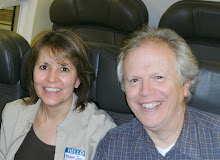
   I admit it. I posed Scott for this picture, but I didn't have to work very hard in posing him. Scott had been in Haiti since two days after the quake (a week before we got there) and operating with very little rest.  He has been visiting Haiti once a quarter for the last five years from the CURE hospital in Santo Domingo. His team from CURE was one of the first to enter after the quake. With his experience and his presence on the ground he was able to direct both the CURE group and the Loma Linda University group in planning for the trip.  See the CURE blog above left.

 
Kaye Wilkins, M.D.
     Simply the most productive member of our team, Kaye was tireless in his efforts to improve our efficiency.  Kaye has previously visited Haiti and taught pediatric orthopaedics.  In our OR he plowed into what I had thought was just a room full of abandoned equipment.  In the course of organizing the room he found many useful tools including a dermatome with brand new blades. In the picture above he has just reorganized our cast room.  He also payed a visit to our warehouse.
 
Kaye Wilkins, M.D. and Charles Sandefur president of ADRA
   Charles Sandefur, the president of the Adventist Development and Relief Agency, was in Haiti to help with ADRA's efforts to relieve suffering.

 
Arrival of Haitian-American nurses; departure of LLU team
    As you might imagine the arrival of American nurses who had grown up in Haiti was an enourmous help.  I am only sorry that we got to work with them for such a short period of time.


Sunday, January 31, 2010

Youth is not wasted on the young

We would like to pay tribute to the many younger members of our teams who went to extraordinary lengths to get to Haiti and found ways to contribute after they arrived. We cannot thank them enough.
 
From left to right: Brenna (ICU-UCSD), Cassia (ICU-UCSD), Melanie, Angela (ICU-UCSD), Melissa (CRNA-LLU) and Shelly (ICU-UCSD)
    These four young women from Thornton Hospital at UCSD decided to come to Haiti and joined with a vounteer group to get transport to Haiti. The hospital has no ICU yet.  They went straight to the OR and created order out of disorder. They organized the supplies and drugs both the new and old. They cleaned. They ran the board and the patient transport. It put me in mind of Stephen Ambroise writing about how World War II put very young people in positions of high responsibility. They rose to the occasion.

With the arrival of Haitian nurses, these four took over night duties in the immediate postop area and again created order. Note the creative use of duck tape and empty boxes in making badly needed shelves.
 
Not your usual picture of the night supervisor? Cassia is rounding in the post-op area. She will be wearing a hiker's head light for rounding in the dark. Surgeons wear them to operate when there is power failure.

 
   Johnny DeBeers' team from South Africa. Backed by Gift of the Giver, a Muslim charity in South Africa, the team flew to Paris and from there to Punta Cana at the extreme East end of the Dominican Republic. They went by car and truck from there to Port-au-Prince, some 16 hours?  This young group included: one Nurse, one PA, one Anesthesiologist, three Ortho. Surgeons, one vascular surgeon and one maxillofacial surgeon. These young caregivers looked fresh-as-a-daisy in spite of their journey and did great work.

 
Mimi an orthopaedic traumatologist and LLU alum found her way from San Luis Obispo with two other docs and gave yeoman service in the tent at the university.
 
Last but not least, these Pathfinders aided with security in the hospital and helped in the ADRA warehouse.  ADRA was supplying the tent city at the university and helped out our hospital. (Pathfinders is an international youth organization; ADRA is the Adventist Develpment and Relief Agency, and NGO active all over the globe.)

Anticipating Needs

I've asked the crew in Haiti to post on their blog at least several times a week if not daily a list of what they have lined up. In that way you can see what directions the disease incidences are taking.
 
The board lists about 25 cases some of which are marked complete.  The upper right hand corner shows the patients scheduled for redebridement. The lower right those for skin grafting.  The list reflects not only what is coming to the triage tent but what the surgeons need. For example, the list showed a number of closed femur fractures while we were waiting for Lew Zirkle and the SIGN nails.  The day after he was there the number of femurs had greatly decreased.
    Im terms of your team you will need more nurses than surgeons. You may also want people to do security on the grounds.  Everyone in town wants to translate for you as that means one meal a day.  Other teams in town have reported some "shrinkage" in their supplies.  Another reason for security people.  We had an engineer with us. He also wasn't bored.

Post-Traumatic Stress Disorder


As all of the patients within the hospital compound were trauma patients PTSD was not unexpected.  However, two clinics were started near the hospital for the uninjured, and there volunteers saw evidence of PTSD among earthquake survivors. Volunteers organized to open a clinic across the street from the hospital, as well as at the Adventist university just up the street.  An unoccupied building was used across the street, but a large tent became a clinic at the university.
Angela (ICU-UCSD) working in the tent.

This was done to meet the nonsurgical needs of the tent city that had sprung up at the Adventist University as well as the surrounding community.  Volunteers found that Haitian parents asked for their children to be examined who had no obvious injury; they needed reassurance that their children were okay.

 
Jesse (Anes. UCSD)  and

 
Melissa (CRNA LLU) examining children 
The volunteers found that people needed reassurance and that vitamins or stickers went a long way in providing it.


Thursday after we returned we spoke by phone with a psychiatrist who is part of a group headed to this clinic and several orphanages.  He and his wife, who speaks French, will be sorely needed.


The Accelerated Passage of Time

   One evening Doug our chief of medicine asked me if we were still doing as many amputations. I answered, "No, I haven't done one since yesterday." This little interchange illustrates the rapidly changing situation.  Doug asked the question because his predecessor, also a non-surgeon who arrived immediately after the quake, had had to perform an amputation.  My answer shows how my conception of time passing had been altered. To my thinking yesterday was a long time ago. Now that we are home yesterday is very recent.

Organization and Cooperation: Vive la France

We are now safely back, and are very happy with what we were able to accomplish in terms of patient treatment and continuing to create order out of chaos.  The job is far from finished, yet we continued to make significant progress daily in organizing patient care and the hospital.  We wanted to take this opportunity to thank our partners in this effort, the physicians and medics of the French Fire and Rescue team.  These were both civilian and military professionals.  Without their monumental effort, we could not have accomplished what we did in the hospital. 

The French team consisted of about 10 physicians and 30 medics under the leadership of Dr. Patrick Benner (top with Melanie and Laura) and his assistant Jacques Nibelle (above). Their gendarmes (military police) provided outdoor security and controlled the entrance to the hospital.  Under tarps and tents outdoors, the French medical team triaged all of the incoming patients and provided pre-operative and post-operative care during the day.  They were tireless in treating the patients and creating order out of chaos.  They constantly revised their organization of their tents for better patient flow.  They created zones in "tent city" to help locate patients.  "Tent city" was the lawn which housed 500-700 Haitians, under various kinds of blankets, tarps or tents, where the patient recovered from surgery, along with the rest of the family members. 

The excellent interaction was a result of effort by both teams.  Physicians met three times a day:
     7:30 am - hospital team notified arriving French team of what surgical procedures had been done during the past 24 hours.
    11:00 am - French team presented to an orthopaedic physician patients for surgery or transfer
     5:00 pm -  departing French team notified hospital team what was going on in pre-op and post-op, especially patients about whom they had concern. (Jacques leading evening rounds above) (Below, the French team leaving in the evening)
By the time we left, the flow of information regarding patients between the French and hospital was smooth, and patient care consistent. 


Zone 4: the least seriously injured

 
Post op Zone and caregivers

 
What started as a potential outside OR became the Pre-op tent.  A very effective organizational change.


Friday, January 22, 2010

Orthopaedic cases:
Sources: We are treating injuries from the January 12 earthquake. The patients have been injured in outlying districts and have been coming here by whatever way they can. The more mobile have even come in over our fence bypassing the gate.
Types: Fractures of all bones. Spine fractures have been sent out. We have used external fixation and amputation mainly. We are going to start femoral rodding with the Sign nail this evening. We have plates and screws. Many of the patients are, of course, already infected. Limb salvage has been impossible in some cases where it may have been possible if the patient had been treated earlier.
Future volunteers: Orthopaedic surgeons and the people who work with them will of course bee needed for months. The need for Plastic Surgeons will go up in the coming weeks. Then we will need prosthetists and orthotists. Physical and Occupational therapists will be helpful in both the early and late phases of the recovery of Haiti.